 English
 Arabic
 Russian
 French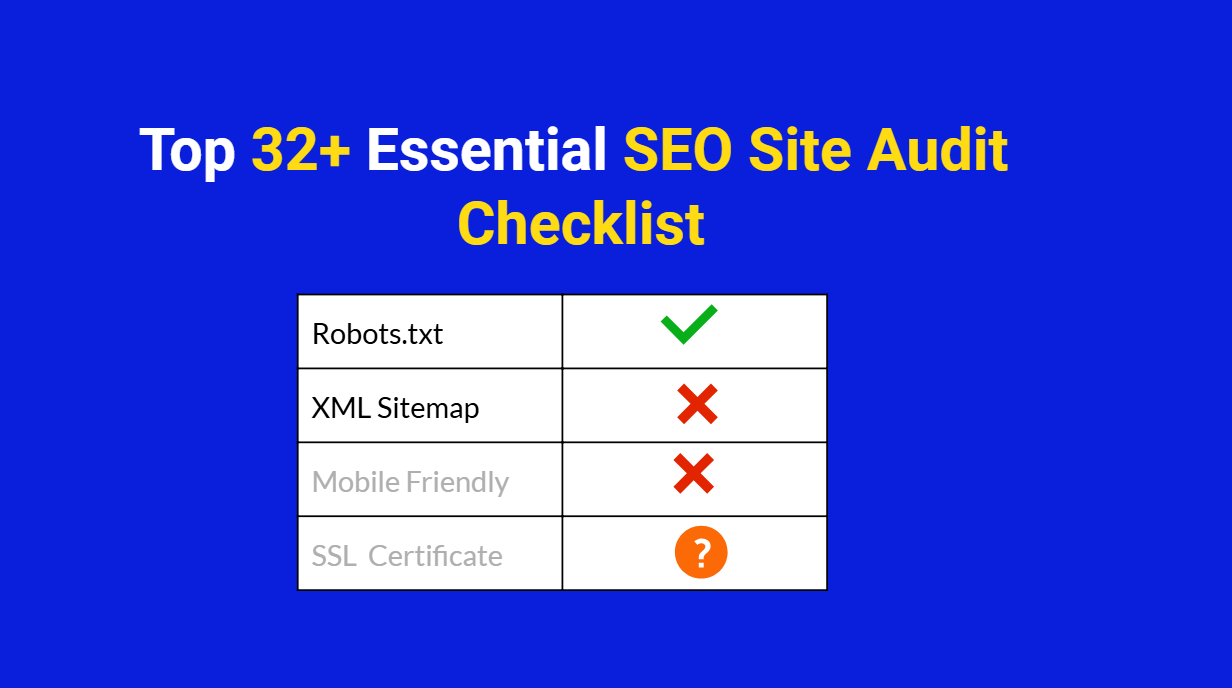
An SEO site audit is an essential process for evaluating the health and performance of your website in search engine rankings. It helps identify weaknesses, technical issues, and missed opportunities, ensuring that your site is optimized for both search engines and users.
By following a comprehensive SEO site audit checklist, you can ensure your website is optimized for both search engines and users. This checklist covers various aspects such as site speed, mobile optimization, content quality, backlink profile, and technical elements like metadata and structured data, providing a roadmap to enhance your SEO strategy and boost your rankings.
For expert guidelines, consult the best SEO agency in Dubai. They will assist you with possible ways to improve your website performance by identifying technical and on-page issues.
Why is SEO Site Audit Essential for Websites?
An SEO site audit is essential because it helps identify and fix technical issues that can hinder search engine crawling and indexing. It ensures that your website is optimized for better visibility and higher rankings.
Regular audits improve user experience by enhancing site speed, navigation, and content quality. Ultimately, it helps maintain a competitive edge by keeping your website up to date with SEO best practices and algorithms.
Types of SEO Checklist
Technical SEO Checklists
On Page SEO Checklists
Off Page SEO Checklists
Content SEO Checklists
1. Technical SEO Checklists
S. No | Name of the Checklist | Analysis Tools |
1. | SSL Certified and Security | Manually |
2. | XML Sitemap | website.com/sitemap.xml |
3. | Robots.txt file with sitemap url | website.com/robots.txt |
4. | HTTP redirection | Manually |
5. | Website Loading Speed and Performance (mobile & desktop) | pagespeed.web.dev |
6. | Mobile Friendly | Search Console |
7. | Favicon | SEOquake |
8. | Canonical Issue | SEOquake |
9. | Schema Code (local business, rating and faq schema) | Manual check on view source |
10. | Google Analytics Tracking Code | Manual check on view source |
11. | Search Console Tracking Code | Manual check on view source |
12. | No Index Page Checker | Google - site:websitepage.com |
13. | Meta Title | Manual check on view source |
14. | Meta Description | Manual check on view source |
15. | URL SEO Friendly | seositecheckup.com |
16. | Header Tags (H1, H2, H3) | SEOquake |
17. | Image ALT Tag | SEOquake |
18. | OG Image: Title & Description | SEOquake |
19. | Twitter Card | SEOquake |
20. | Facebook Pixel | Manual check on view source |
21. | Custom 404 Page Error | website.com/abc |
22. | Text/HTML ratio | SEOquake |
23. | Internal Link Structure | SEO Optimer |
24. | Toxic Link Checker (high spam score) | Semrush |
25. | Broken Link Checker | Semrush |
26. | 404 Backlink Checker | Semrush |
27. | Duplicate Meta Tag | Semrush |
28. | Duplicate Headers | Semrush |
29. | Duplicate content checker | copyscape |
30. | Keyword density checker on content | Manual |
31. | AI Content Checker | Quilbot |
32. | Keyword Cannibalization Checker | Manual |
33. | DA, PA and SS Checker | Da PA checker |
34. | Domain Age Checker | Small SEO Tools |
1. SSL Certified and Security

Ensuring SSL certification encrypts data between your site and users, boosting trust and SEO rankings. It’s a must for secure browsing.
2. XML Sitemap

This file helps search engines crawl and index your site more efficiently by providing a structured map of your pages.
3. Robots.txt file

Directs search engine crawlers on which pages to index or avoid, enhancing the site's SEO performance.
4. HTTP Redirection
Correct HTTP redirection ensures users and search engines are redirected from outdated or broken URLs to the correct ones.
5. Website Loading Speed (Mobile & Desktop)

To make your website load faster can improve user experience and boost rankings, especially on mobile, which is essential for SEO.
6. Mobile Friendly
A mobile-optimized site is crucial as Google uses mobile-first indexing, influencing search rankings.
7. Favicon

A favicon enhances your site's branding and user experience, appearing in browser tabs and bookmarks.
8. Canonical Issue
Resolving canonical issues prevents duplicate content from harming rankings by ensuring the correct URL is indexed.
9. Schema Code (local business, rating, and FAQ schema)

Adding schema markup enhances search results with rich snippets, improving visibility and click-through rates.
10. Google Analytics Tracking Code
Integrating Google Analytics tracks website performance, user behavior, and conversions, providing insights for SEO improvements.
11. Search Console Tracking Code
Search Console allows you to monitor site performance, detect crawl errors, and manage indexing.
12. No Index Page Checker
Ensures that pages intended not to be indexed (like duplicate or low-value content) are properly marked with "noindex" tags to avoid penalties.
2. On Page SEO Checklists
13. Meta Title
The meta title appears on search engines and browser tabs, providing a concise summary of the page’s content for SEO and user engagement.
14. Meta Description
This snippet below the title in search results summarizes the page content, influencing click-through rates and improving SEO rankings.
15. URL SEO Friendly
Clean, descriptive, and short URLs are key for SEO, containing relevant keywords and being easy for users and search engines to understand.
16. Header Tags (H1, H2, H3)
Header tags structure your content, making it easier for search engines to understand the hierarchy and relevance of your page.
17. Image ALT Tag
ALT tags describe the content of images for search engines, improving SEO and accessibility by providing context when images don’t load.
18. OG Image
Title & Description: Open Graph images and descriptions optimize how your page appears on social media, enhancing engagement and click-through rates.
19. Twitter Card
Similar to Open Graph, a Twitter card optimizes how your page appears on Twitter, including an image and description to boost engagement.
20. Facebook Pixel
A tracking tool used to measure ad performance, optimize campaigns, and build custom audiences based on website actions.
21. Custom 404 Page Error
A custom 404 error page enhances user experience by guiding visitors back to the right content, reducing bounce rates.
22. Text/HTML Ratio
The ideal balance of text to HTML code; a higher ratio of text indicates better content quality, improving SEO rankings.
23. Internal Link Structure
A clear internal linking structure helps users and search engines navigate your site, spreading link equity and boosting SEO rankings.
3. Off Page SEO Checklists
24. Toxic Link Checker (high spam score)
Identifies harmful backlinks with a high spam score that could negatively impact your website’s SEO and reputation, allowing you to disavow them.
25. Broken Link Checker
Scans your site for broken or dead links, which can harm user experience and SEO rankings, and helps in fixing them for better site health.
26. 404 Backlink Checker
Detects backlinks that lead to 404 error pages on your site, ensuring that external links are not pointing to non-existent pages, which can damage your SEO performance.
4. Content Audit SEO Checklists
27. Duplicate Content Checker
Scans your website for identical content across pages, ensuring that no duplicate content negatively affects your SEO rankings.
28. Keyword Density Checker on Content
Analyzes your content to ensure proper keyword density, preventing over-optimization or keyword stuffing while improving SEO.
29. AI Content Checker
Evaluates content generated by AI for quality, uniqueness, and adherence to SEO best practices, helping to maintain high-ranking, user-friendly pages.
30. Keyword Cannibalization Checker
Identifies instances where multiple pages on your website target the same keyword, potentially causing competition and affecting SEO rankings.
Learn how to create a website that aligns with SEO practices and adheres to Google algorithms. This ensures your site ranks higher in search results, attracts the right audience, and delivers a seamless user experience.
Conclusion
An SEO site audit is an essential practice for improving your website’s performance, ranking, and overall user experience. By regularly checking and addressing the elements on this SEO audit checklist, you ensure that your website is optimized for both search engines and your audience. Whether it's fixing technical issues, optimizing on-page elements, improving content, or building a strong backlink profile, an SEO audit helps you stay ahead of the competition and achieve long-term SEO success.



1738862862.jpg)


